How it Works
Getting started
with BCRA isstraightforward
Begin by completing the BCRA Interest Form on our website. You will share your child’s name, grade, contact information, any available reading assessment scores from school, and the tuition tier that works for your family. Submitting the form does not commit you to enrollment — it begins the conversation.

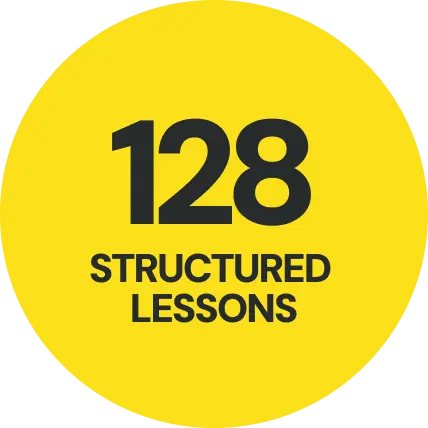
Once we receive your interest form, we will schedule a free placement assessment for your child. This assessment is not a test to pass or fail. It is a structured tool that identifies exactly where your child falls within the 128-lesson foundational reading sequence. The results tell us what your child already knows and where instruction should begin.
After the assessment, we match your child with other students at or near the same reading level to form a cohort. Cohorts are capped at four students. If we do not have enough students at your child’s level to fill a cohort, your child will be placed on a waitlist. You will be notified as soon as a cohort becomes available. We do not place students in a group that does not match their level — instruction that is too advanced or too basic for a child does not serve them.
Once matched to a cohort, you will complete enrollment by paying the one-time $20 enrollment fee and selecting your tuition tier. You will also receive an orientation that explains how the program works, what the parent commitment looks like, and how to support your child’s practice at home.
Classes meet twice a week — either Mondays and Wednesday or Tuesdays and Thursdays. Each session is one structured lesson. After each class, your child will bring home practice materials to complete with you before the next session.
Once matched to a cohort, you will complete enrollment by paying the one-time $20 enrollment fee and selecting your tuition tier. You will also receive an orientation that explains how the program works, what the parent commitment looks like, and how to support your child’s practice at home.
After students complete the foundational decoding and phonics sequence through , the program transitions students from “learning to read” into “reading to learn.”
Students then focus on reading fluently, strengthening comprehension, expanding vocabulary and knowledge, and developing stronger writing and critical thinking skills through chapter books and informational texts.